

E+H FMR62 Procurement, Lead Time and Replacement
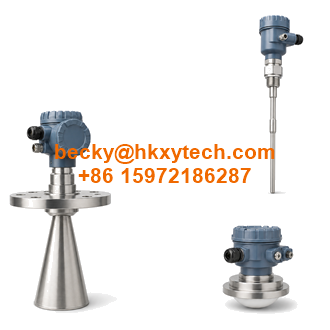
E+H FMR62 Procurement, Lead-Time and Replacement Guide
Endress+Hauser Micropilot FMR62 is an 80 GHz non-contact radar level instrument for demanding liquid applications. For buyers evaluating FMR62-NBBCAAGMF5MRK, the most important task is not simply locating an FMR62—it is confirming that the complete configuration matches the process, approval and integration requirements before the order is released.
Order code: FMR62-NBBCAAGMF5MRK
Measurement: continuous, non-contact radar level measurement
Buying priority: configuration validation, realistic lead-time control and engineered replacement of legacy instruments
Why FMR62 is considered for demanding tanks
The FMR62 uses tightly focused 80 GHz radar and is designed for continuous level measurement in aggressive liquids and hygienic duties. Official Endress+Hauser data lists measuring distances up to 80 m, accuracy up to ±1 mm, process temperatures from −40 to +200 °C and process pressure from vacuum to +25 bar, depending on the selected configuration.
Available antenna and process-connection choices include PTFE or PEEK wetted antenna materials, threaded and flanged connections, and selected hygienic connections. Options such as HART, Bluetooth operation, Heartbeat Technology, SIL and hazardous-area approvals must be confirmed against the complete order code rather than assumed from the root model alone.
Procurement decision checklist
- Confirm the process: medium, dielectric behavior, foam, vapor, buildup, turbulence and internal obstructions.
- Confirm mechanical fit: thread or flange standard, nominal size, nozzle height, antenna type, sealing concept and available headroom.
- Confirm operating limits: measuring range, process and ambient temperature, pressure, wetted-material compatibility and enclosure requirements.
- Confirm compliance: hazardous-area approval, SIL/overfill protection, hygienic or material certificates and local regulatory requirements.
- Confirm integration: 4–20 mA HART, switching output or other required interface, existing power supply, control-system compatibility and commissioning method.
- Approve the full code: use FMR62-NBBCAAGMF5MRK as the purchasing reference only after the decoded options match the datasheet and site conditions.
Lead-time management that protects the project
First freeze the process connection, antenna, materials, approvals and communication options. Then request availability against the exact order code and identify which options are driving production time. For shutdowns or commissioning milestones, add logistics and inspection buffer, confirm partial-delivery possibilities, and agree on a technically approved alternative before an urgent shortage occurs.
For repeat-use sites, a practical strategy is to standardize a small number of approved configurations, keep one critical spare where downtime exposure justifies it, and maintain a cross-reference showing which tanks can share the same instrument. This reduces emergency purchasing without introducing unverified substitutions.
Replacing old or discontinued level instruments
A replacement decision should begin with the installed instrument’s complete order code and serial number, not only the family name printed on the housing. Check the manufacturer’s product life-cycle and replacement information, then compare the old and proposed devices point by point.
- Record the old order code, serial number, firmware, output, approvals and mounting dimensions.
- Document the vessel, nozzle, medium, maximum temperature and pressure, measuring range and control-system requirements.
- Verify whether adapters, new gaskets, cable entries, display modules or parameter changes are required.
- Obtain written confirmation of the new configuration and keep an approved rollback or contingency plan for the shutdown window.
- Commission and validate the measurement before the legacy unit is removed from the site spare pool.
Important: FMR62, FMR62B and other Micropilot or Levelflex families are not automatically interchangeable. A root-model similarity does not prove a one-for-one replacement; process, mechanical, electrical and approval details must all be checked.
E+H Level Instruments in Demand
The following configured models are currently receiving strong purchasing interest. Availability and replacement suitability should be checked against the complete code:
